

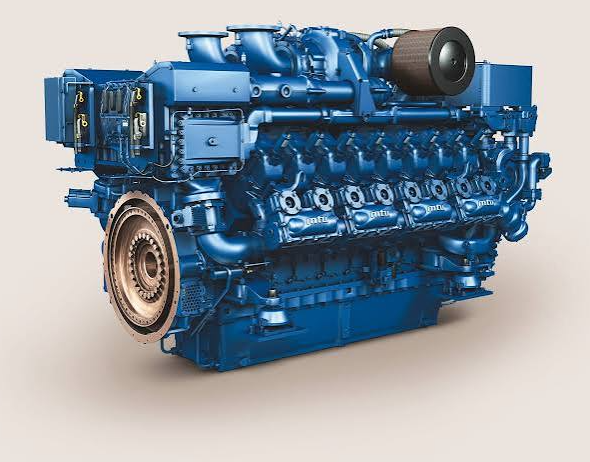
An MTU engine that’s running below its best isn’t necessarily broken.It just uses more fuel than it should, runs a bit rougher than it used to, and slowly loses the performance it had when it was new.Usually, the problem starts with the fuel injectors and filters.Here’s how these two parts affect engine performance and what to watch for before the engine’s output drops too much.
Why Fuel Delivery Precision Is So Important for MTU Engines
MTU diesel engines are made for tough uses — like power generation, driving ships, and running industrial machines — where steady, efficient work under heavy load is key.
Getting that steady performance depends on delivering fuel exactly right: the correct amount, broken into tiny droplets, and injected at the perfect time during the engine’s combustion process.
– Even small changes in how the injector sprays fuel or when it sprays it can lower how well the fuel burns.
– High-pressure common rail systems, which many MTU engines use, rely on the injector’s accuracy to make sure every cylinder gets the same amount of fuel.
– The quality of fuel that gets to the injectors depends completely on the filter doing its job, which is why the two parts work together instead of separately.
When either the injectors or the filters start to fail, the problems get worse.
A slightly faulty injector combined with slightly dirty fuel works worse than either issue alone.
How Fuel Injectors Impact Engine Performance
Spray Pattern and Atomization Quality
Injectors don’t just send fuel in — they break it into a fine mist that mixes well with air, leading to clean and efficient burning.
How well the fuel is atomized directly affects how completely it burns.
– A worn or partly blocked injector causes a bad spray pattern, which leads to incomplete burning and leftover fuel.
– Incomplete burning results in less power, more fuel use, and worse exhaust.
– Even injectors that are still working can gradually lose their atomization quality, making this issue hard to spot without proper monitoring.
Injection Timing and Precision
On common rail systems, injectors control not only how much fuel is sent but also exactly when, often with multiple injections during each engine cycle to improve performance and reduce emissions.
– Precise timing affects how much pressure builds in the cylinder and how well the fuel’s energy turns into power.
– Injector wear can cause timing to shift from the intended signal, making performance worse even if the engine’s control system works fine.
– Differences in how injectors work between cylinders create uneven power, causing more vibration and stressing the engine over time.
Injector Wear and Its Slow Effect
Fuel injectors wear down slowly from constant use, poor fuel quality, and heat.
This wear doesn’t usually cause sudden failure — it leads to a slow loss of performance that can be easy to overlook without checking the right data.
– Erosion of the nozzle changes how fuel sprays over many hours of use.
– Wear inside the injector’s precise parts can affect how much fuel is measured, leading to more or less fuel than needed.
– If left unchecked, injector wear makes the engine work harder to produce the same power, speeding up wear in other parts of the system.
How Fuel Filtration Protects Injector Performance
Filtration as the First Line of Defense
Modern common rail injection systems work at very high pressures with very tight internal clearances.
This level of precision is exactly why even small amounts of contamination can be so harmful — particles that are harmless in a simpler fuel system can cause major damage in a high-pressure injector.
– Filters remove small particles before they can reach the injectors, helping to protect the tight internal clearances.
– If water isn’t caught by water-separating filters, it can cause corrosion and damage inside the injectors.
– A properly working filtration system helps injectors keep their precision and performance throughout their expected lifespan.
What Happens When Filtration Falls Short
Filter issues don’t always show up right away.
Sometimes, the damage builds up slowly until the injectors start to perform worse.
– Contaminated fuel speeds up injector wear, which can cut down their life much faster than if they were using properly filtered fuel.
– Clogged filters can block fuel flow, leading to a lack of fuel supply during high engine demand, which causes the engine to lose power or run roughly.
– Some systems have bypass valves that let unfiltered fuel pass through when a filter gets blocked.
This helps prevent engine stalling but can also expose the injectors to contamination.
Choosing the Right Filtration for Your Fuel Supply
Not all fuel filtration systems are the same, and the right setup depends on the actual fuel quality available at a given site.
A mismatch is a common and preventable cause of injector problems.
– Sites with changing fuel quality need better primary filtration and water separation than those with consistently clean fuel supply.
– The filter’s micron rating should match what the injection system requires — using a coarser filter than specified won’t work as well.
– Water-separating filters are especially important in humid areas or where fuel storage and handling introduce moisture risks.
Signs Your Fuel System Needs Attention
Looking out for these signs can help you take care of fuel system issues during regular maintenance instead of waiting until performance has dropped significantly.
1. Increasing fuel consumption for the same load and output is often the first sign that injectors are becoming less efficient.
2. Rough running or more vibration, especially when the engine load changes, may indicate uneven injector performance across cylinders.
3. Trouble keeping full power under heavy loads may mean fuel delivery is not keeping up with what the engine needs.
4. Changes in exhaust smoke, particularly black smoke that shows incomplete combustion, can often be traced back to problems with how the injectors spray fuel.
5. Need to change filters more often than expected could signal a fuel quality or contamination issue upstream that should be checked rather than just replacing filters more frequently.
Practical Maintenance Advice for Peak Performance
Follow Filter Change Intervals Based on Actual Fuel Quality
The filter change schedules provided by manufacturers assume a standard level of fuel quality that may not match the real conditions at every site.
– Keep track of how quickly filters get dirty at your specific location and adjust change intervals accordingly, rather than following a one-size-fits-all schedule.
– Sites with fuel quality that changes often should change filters more frequently than those with a consistent supply.
– Keep records of filter condition at each change — if a filter is dirtier than usual before the scheduled time, it’s worth checking the cause, not just replacing it and moving on.
Monitor Injector Performance Proactively
Waiting for a clear drop in performance before checking injectors usually means the engine has been running inefficiently for some time.
– Track fuel consumption trends over time against consistent load conditions to find early signs of injector wear.
– Where possible, use engine data to monitor performance between cylinders.
– Schedule injector inspections or testing based on operating hours, especially for engines used continuously or under heavy load.
Source Genuine or Verified Quality Components
Since injector precision is so important to overall performance, the quality of both injectors and filters should be carefully checked.
– Make sure injector part numbers exactly match your specific MTU engine model and setup.
– Ask suppliers about the micron rating and water separation ability of filters, not just if they physically fit.
– Be careful of substitute filters that fit the housing but don’t meet the original specifications — a filter that fits doesn’t always mean it protects the injectors well.
Local Fuel Quality Considerations in Pakistan
Fuel quality and handling conditions in Pakistan add specific concerns for MTU engine operators.
– Fuel quality can vary between suppliers and regions, so using good primary filtration and checking fuel quality regularly is helpful, rather than assuming it’s always consistent.
– Storage and handling conditions at some sites can introduce contamination before fuel even reaches the engine, so maintaining fuel tanks and checking transfer practices are part of the filtration plan.
– High temperatures during summer can affect fuel viscosity and may speed up the breakdown of stored fuel, so planning storage and rotation practices is important.
– Import lead times for genuine MTU components mean it’s wise to plan replacement and testing schedules in advance instead of waiting for a failure to force an urgent order.
Final Thoughts
To get the best performance from an MTU engine, it depends on the combination of clean fuel delivery and precise injection.
Neither can do their job well without the other working properly.Filtration protects the injectors, and the injectors determine how efficiently the engine can turn fuel into power.Developing a maintenance plan that includes both — managing filters according to real fuel conditions and monitoring injectors based on actual operating hours — helps keep an MTU engine running close to its full potential for longer.
If your MTU engine is not performing as well as it should, visit gencomspares.com.pk to browse genuine spare parts or contact our team to get the right injectors and filtration system for your specific engine model.