

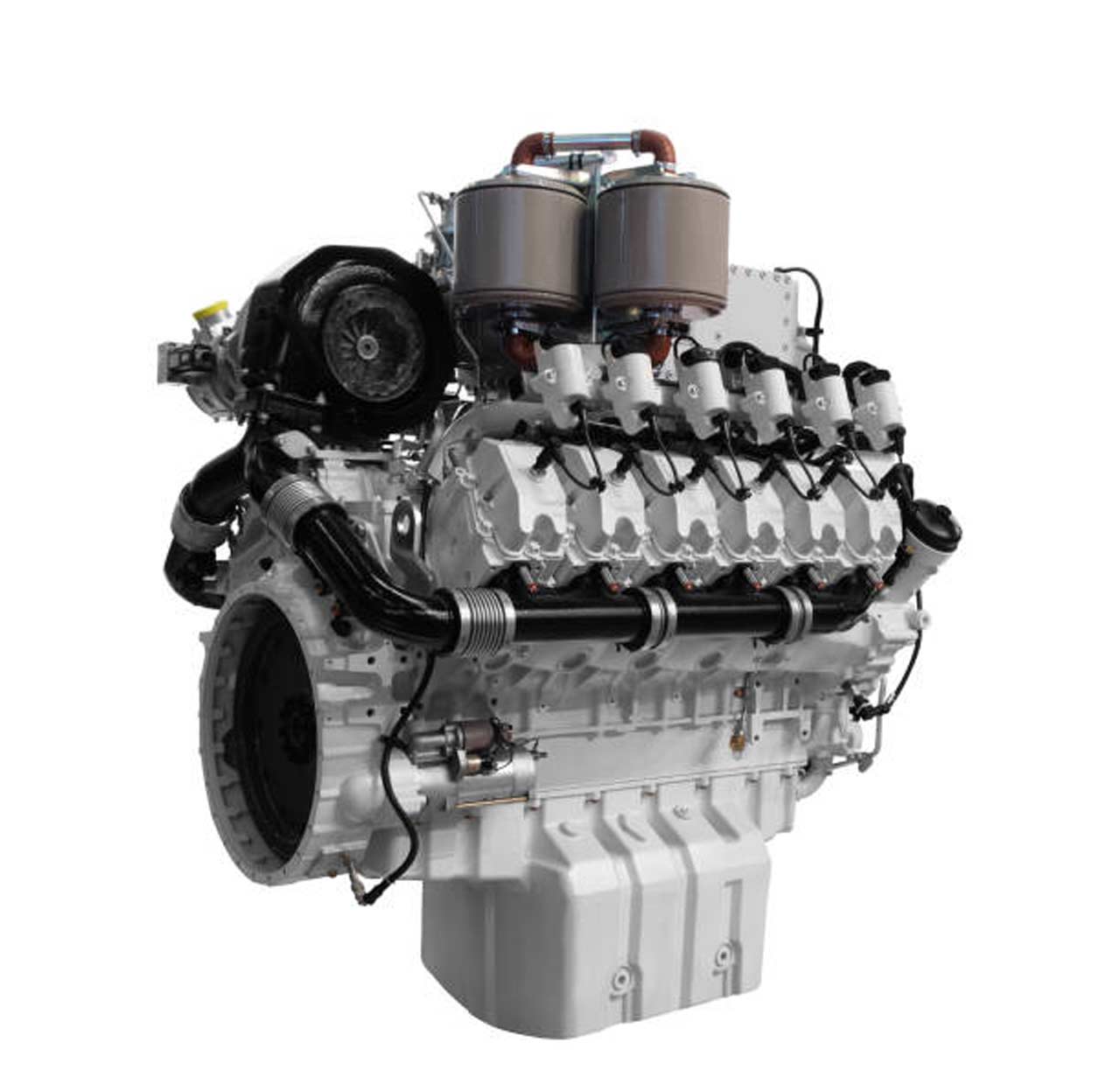
Fault code on MTU gas engine control panel: valuable information that needs a little more context to identify root cause. Different sets of potential root cause can be associated to same code depending on other performance characteristics of the engine. This guide covers a practical approach to decoding fault codes and associated drop-offs.
While tempting to follow a direct link from code to replacement part, this approach loses out on a number of valuable troubleshooting techniques and parts replacements when the actual root cause was in another part of the system.
The single code could be due to several different root cause ranging from faulty sensor to actual mechanical failure that that sensor is correctly sensing the code is likely to present alongside certain performance patterns that are valuable for narrowing down cause and clearing the code without knowing why it appeared can hide a developing fault that will come back with potentially greater impact.
More effective approach takes the fault code as one data point against a background of performance and operational history trends to identify root cause before replacement action.
Following steps are useful way to approach MTU gas engine fault code diagnosis:
1. Logging full fault context
Before moving to next step record exactly what’s been reported by the engine control system.
Note the specific code value along with brief description of its contents per the control panel documentation
Record engine performance state when the fault was reported alongside any recent changes in operational or environmental conditions
Verify whether reported fault is ongoing or intermittent and whether it occurs alone or alongside other codes or alarms
2. Correlating with actual performance
The code will rarely present in isolation from general performance trends that offer valuable troubleshooting insight.
Using this approach, code will have fewer potential root cause and will be much easier to isolate.
Assess the operational performance – particularly power, fuel consumption and overall exhaust reading – against the baseline expected for the engine under similar conditions
Assess whether the code consistently develops under similar operational state or shows up randomly and has no consistent link to a pattern of operations
Review historical trend data leading up to the point where the fault was triggered, paying particular attention to any gradual progression in a related value preceding the fault trigger
3. Isolating between sensor and actual failure
Most fault code troubleshooting approaches eventually arrive at one branch point: whether the problem lies in the reporting sensor or actual component the sensor is meant to track is faulty
Check the physical wiring and connection for the sensor suspected as faulty to rule out connection issues before suspecting the sensor itself is faulty
Wherever possible, cross-check suspected faulty sensor with a corresponding independent or comparable reference to determine whether the sensor is providing consistent results
Consider whether the value reported by the suspected faulty sensor is physically possible given other data being seen, with particular attention to situations where the extreme value doesn’t align with all other data
4. Narrowing based on system category
Based on category of code determine which systems should be assessed as the potential root cause.
Fuel related codes should be used as a basis to assess fuel system as a whole, in accordance with standard fuel system troubleshooting approach
Ignition related codes should be used as a basis to inspect ignition system for issues matching cause of the code
Cooling system related codes should be used as a basis to assess the water cooling system overall performance
Electrical faults often involve a fault in the wiring or connection as well as the control module, and as such should involve both an inspection of the component the code points to and broader electrical check of wiring and connections
Common types of codes and their likely root cause categories:
Fuel system related codes:
Codes related to fuel pressure issues usually points to fuel filters, pumps or issues with actual fuel supply
Codes pointing to fuel mixture or combustion issues can stem from injectors, issues with fuel quality or air intake restriction impacting combustion
Repeated fuel related codes that persist even after initial fault clearing suggest a progressive mechanical failure that needs to be isolated
Ignition related codes:
Misfire codes generally point to faulty spark plugs or coils although timing issues can exhibit similar characteristics
Knock sensor codes should not be dismissed without investigation as underlying detonation issue in the engine
Codes pointing to performance deviation on a per-cylinder basis generally indicate component issue with that specific cylinder’s ignition system
Cooling system related codes:
Codes pointing to high coolant temperatures should include assessment of water pump and thermostat performance as both can independently cause the fault
Codes pointing to coolant level or pressure deviation should prompt inspection for coolant leaks as fault is likely to stem from an actual leak
Sustained cooling related codes specifically during sustained high-load operation suggest margin erosion in the cooling system that may warrant component replacement
Electrical faults:
Communication related issues can stem from faulty wiring between modules in the system, faulty connection on either end of the communication channel or faulty module on either end
Issues specifically with a sensor should be checked against condition of its physical wiring before considering the sensor component as faulty
Intermittent electrical faults, as per general approach to generator troubleshooting, tend to point to marginal connections that can be affected by vibration or thermal cycling rather than a solid hardware fault
Diagnosing performance drop-off without an associated code
Performance drop-off without an explicit associated code requires a slightly different diagnostic approach based around trends rather than discrete alerts.
Trend data around key performance indicators should be carefully reviewed in order to see a consistent drop-off that distinguishes it from an isolated anecdotal observation
Correlate drop-off timing with any recent maintenance or changes to fuel source or environmental operating conditions that might explain the change
Consider whether drop-off is gradual or came suddenly, with latter pointing to an event or fault that caused it and the former pointing to component wear
Look at combination of multiple metrics rather than focusing on one as drop-off will likely be seen across a range of factors
Creating effective troubleshooting workflow
Don’t overlook the simple checks
Even as experience grows the temptation to skip obvious checks in favor of more involved procedures is likely.
Confirm simple conditions – fuel, coolant level, battery condition and so forth – before moving onto more involved diagnostic procedures.
Make sure the fault has not been triggered in the first place by a recent maintenance procedure – not uncommon for a connector to fail to seat correctly during routine servicing.
Consider whether the fault is actually a result of operating under non-typical conditions that would not usually be considered abnormal.
Take advantage of available diagnostic features
Modern engine control systems offer a substantial amount of diagnostic headroom, and most of it should be utilized for troubleshooting.
Review historical trend data associated with the engine in order to see the trend preceding the fault rather than looking only at the conditions at the moment of the fault
Look for other less-obvious codes or warnings in the fault history that might supplement the information in the main fault code
Where available, utilize any diagnostic functions offered by the control system to narrow down a suspected component before physical inspection can take place.
Logging and maintaining troubleshooting history
Maintain uniform documentation practices across troubleshooting sessions, and ensure any relevant information is logged clearly alongside the fault code and context of the fault.
Before performing a troubleshooting session always review the logs from previous sessions on the same engine to identify patterns.
Share documentation across technicians working on the same engine so that accumulated knowledge about the nuances of the particular engine is not lost between visits.
Local considerations for MTU fault pattern in Pakistan
Hotter temperatures in summer increase likelihood of cooling and thermal related fault codes and therefore value of regular cooling system maintenance, particularly in hot months
Wider variability in fuel quality across local suppliers than in more established markets can lead to higher number of fuel related fault codes, with corresponding value in verifying fuel quality as troubleshooting step
Extended continuous operation at industrial and power generation sites leads to component wear rates and accumulated operating hours that exceed those of mobile equipment, and should be taken into account in determining significance of recurring fault rather than dismissing it as isolated
Exposure to dust in many worksites leads to accelerated component wear across air filtration and related components, which can contribute to combustion related fault codes if maintenance is not kept up-to-date.
Final thoughts
MTU gas engine fault code troubleshooting should be approached as a multi-step process involving capturing context of the reported faults, correlating the fault description against actual observed performance trends and isolating actual root cause between potential sensor related and mechanical root cause. Developing thorough documentation practices around maintenance and troubleshooting is essential to ensuring future diagnostics are fast and effective.
If your MTU gas engine fault code points to a parts replacement need or you’re facing performance issues, browse our genuine spare parts at gencomspares.com.pk or contact our team for assistance with sourcing the relevant parts for your engine model.