

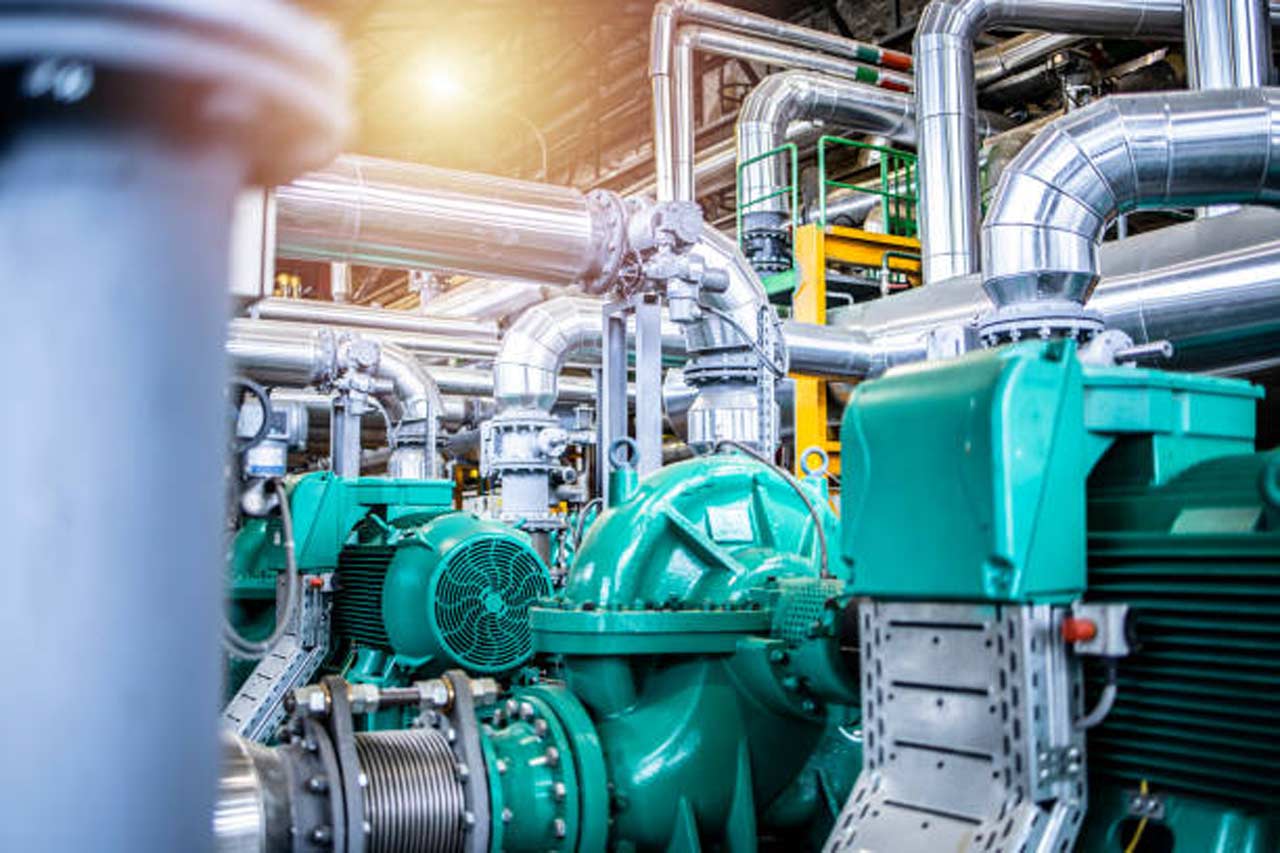
The purchase of a used gas engine for an industrial plant involves a different set of considerations than many buyers of used engines may initially believe in. The purchase price of the used engine represents only one factor in the overall value equation, with the long-term performance becoming the true deciding factor in whether a buyer has made a wise acquisition.
This document provides a guide to important considerations when purchasing an used gas engine for an industrial application, as well as the rationale behind each item.
Why Industrial Buyers Require a Higher Level of Scrutiny
A used gas engine purchased for industrial application will typically occupy a different role in an organization than many smaller-scale used equipment purchases. This fundamental difference between larger and smaller used equipment purchases creates a number of secondary considerations and implications for a buyer.
A gas engine powering an essential component of a plant’s operations cannot afford the same level of downtime risk as a standby power generator, for instance.
The integration of such an engine into a functioning plant also implies a higher cost of error due to additional infrastructure required, with incorrect assumptions about an engine’s service life potentially creating disruption to carefully-developed production planning.
These differences fundamentally change the risk-reward calculus of the purchase, requiring a buyer to conduct a far more thorough evaluation of a candidate engine than they would a smaller or less critical acquisition.
Applicable Specifications and Capabilities
Confirm Application Suitability
Prior to evaluating an engine’s service history or physical condition, buyers should first confirm that the engine can actually meet their application’s needs.
In this context, a full evaluation of an engine’s power curve is required, rather than a simple assessment of whether it falls within a given power range. This assessment should consider both the continuous and the peak power figures and compare them to the target application’s requirements.
As with power output, a similar evaluation should be made of an engine’s governor characteristics, comparing both its continuous and peak RPM capabilities to the requirements of the driven machinery.
Finally, consideration must be made of an engine’s fuel economy and ability to operate on a given set of gaseous fuels as well as any potential variations in gas composition at the buyer’s worksite.
Emissions and Regulatory Compliance Considerations
Regulatory requirements represent another potential consideration when evaluating an engine. Depending on a buyer’s location and the emissions regulations pertinent to them, engines may require specific exhaust treatment components or modifications in order to bring emissions levels into compliance.
A buyer should therefore assess not only whether a candidate engine already meets applicable standards, but also evaluate the engine’s documentation and physical condition to ensure that any included emissions control equipment is in good working order.
In cases where exhaust emissions upgrades would need to be made to utilize a candidate engine, such requirements and costs should be considered when determining the overall value of the acquisition versus a new engine.
Operating History of the Engine
Request Maintenance Records
Along with the obvious visual inspection, reviewing an engine’s maintenance records can be critical to making an informed purchasing decision, particularly for engines represented as being in good condition. As with most things, engines deteriorate over time if not maintained in accordance with the manufacturer’s recommendations.
When requesting and reviewing records, buyers should attempt to identify any indications that the engine may have been neglected or abused during its time in service. In particular, it is worth determining whether any scheduled maintenance was missed and, if so, whether this impacted the engine in a discernible way. Finally, if the engine was serviced by external contractors, buyers may wish to confirm directly with them regarding the condition of the engine prior to its sale.
While there is always a possibility a candidate engine may have had an outstanding record of maintenance and care, this step becomes increasingly pertinent if the seller is demonstrably untruthful or misleading on other aspects of the sale.
Operating Time and Conditions
The hours an engine has been in service, like its maintenance history, can be a critical factor in determining whether one is considering a good or a bad purchase.
Aside from finding out how many hours were recorded on an engine in total, it is also worth requesting a description of the engine’s service profile – in particular, the extent to which it was utilized and whether it was under continuous load for large amounts of the time. Finally, a buyer should also get a sense of what the operating environment was like for the engine in its previous service – was it under significant stress, or did it operate in ideal conditions?
A final important consideration regarding operating hours is the relevance of an engine’s reported hours to its actual condition. Since engine wear is not linear or entirely predictable, engines that have been in constant service for 3,000 hours may wear differently than ones which only ran for 2,000 hours before being put into storage for several years.
Physical and Mechanical Condition Overview
Core Components of the Engine
The core assembly of a given engine is its cylinders, and therefore an appropriate visual inspection of the cylinders should be carried out when possible.
Depending on the accessibility of the cylinders at a given engine, it may also be worth requesting an examination of the bearings, the valve train, and the overall cleanliness of the engine. With regard to the first three items, asking to see any signs of servicing or repairs can be illuminating as to the care an engine has been given, while the engine’s general cleanliness and lack of apparent damage is always a reliable sign of how well it has been maintained.
Support Components of the Engine
Beyond the engine itself, other supporting equipment may need to be evaluated as well. In particular, it may be worth inspecting the cooling system components such as the water pump and the heat exchanger, fuel system components such as pressure reduction or filtering equipment, and ignition components in the case of a gas engine.
A brief discussion about the condition of the engine’s lubrication system is also advisable, depending on the type of engine – certain engines, notably some Diesel engines, feature engine oil pumps or force-feeding oil distribution as part of the lubrication system.
Lastly, examining the monitoring and control equipment for the engine can provide important insight, especially if a buyer has any intention on using the engine for its exact intended purpose.
Performance Considerations
Load Test Recommendations
Unless a buyer has a reason to believe otherwise, a test run on an engine should always be carried out prior to purchase.
The test itself should be a representative sampling of the type of load the buyer would put on the engine; therefore, it is unwise to simply test an engine at idle when the engine is intended for serious-duty work.
A buyer should carry out basic performance checks to ensure the engine is capable of producing the power it advertises itself to be able to. However, performance testing should not necessarily be limited to simple power figures – a load test that runs at representative temperatures, pressures, and RPMs for an extended period of time is generally advised to ensure there are no serious flaws in the engine.
Third-Party Inspection Suggestions
While the inspection of an engine can be done by a buyer themselves, there may be value in hiring an independent third party – particularly one with technical experience on the type of engine being purchased – to carry out their own inspection as well. Doing so mitigates the potential for an engine seller to withhold or misrepresent relevant information on a candidate engine.
A third-party inspection carries a much stronger weight than almost any seller-provided documentation or verbal assurances, making it one of the most valuable tools a buyer of used gas engines can invest in. Furthermore, the cost of an independent inspection is negligible in the grand scheme of things, representing only a tiny fraction of the overall cost of such a large and important purchase.
Other Economic Considerations
A used engine purchase should never be assumed to represent a better value than a new engine purchase; rather, a buyer should make assumptions and projections based on objective facts. As such, a serious buyer should make calculations to approximate the total cost of ownership of an engine they are considering for purchase.
Such calculations may include, in addition to the purchase price of the engine itself, the cost of transportation and installation at the buyer’s facility as well as the cost of any servicing immediately upon the engine’s arrival. Equally important is the comparison of the engine’s remaining service life against the engine’s price – simply put, a slightly cheaper used engine might end up being significantly more expensive when one considers the price of a new engine with a longer lifespan.
In short, buyers should carefully weigh all economic factors of a potential engine purchase, rather than making assumptions based on a narrow understanding of the value proposition. After all, no one sets a price tag on something they don’t know the value of, and buyers should adopt the same prudence when considering a potentially large expense.
Parts Availability Considerations
As important as it is to acquire an engine at an attractive price, a buyer of a used engine must also consider the long-term cost of maintaining an engine. As such a buyer will most likely be working with an engine design from a particular manufacturer, it is always prudent to confirm that spare parts for the engine are still readily available and affordable.
In this context, readiness for engine maintenance also extends to general mechanical maintenance supplies for an engine, although these are generally not difficult to acquire.
When in doubt of the availability of parts for an engine, it is unwise to take someone’s word – instead, buyers should reach out to several potential suppliers and request information on the availability of parts or services for a particular engine.
In the event that the buyer is still considering the acquisition of an engine for which parts are unavailable, particular caution should be exercised. With regard to parts availability, certain types of engines are significantly more difficult to work with than others – in particular, engines of uncommon make or model should raise red flags for buyers.
General Installation Considerations
Aside from its economic viability, the value of an engine acquisition should be judged based on its applicability to a buyer’s general needs. As buying a used engine often requires extensive setup and testing prior to deployment, a buyer’s expectations should reflect that fact. As such, a buyer should make sure that a candidate engine is compatible with the systems and ancillaries they have at their disposal.
Equally important is budgeting appropriately for auxiliary equipment that may be required or modifications that may have to be made – preferably, buyers have access to technical support with the appropriate skills for the engine in question.
A final point worth noting is the requirement to test-run an engine once it has been installed in order to properly break it in or make any necessary adjustments. This process should not be rushed, and an appropriate period of testing should always be allowed.
Red Flags to Watch for
In evaluating an engine, it is always useful to keep an eye out for potential warning signs. When reviewing an engine’s service history, inconsistencies or failures to disclose information should raise a red flag. During a visual inspection, signs of neglect or poor maintenance should raise concerns. In assessing the engine’s physical fitness, claims of exceptional condition despite signs to the contrary should be viewed with skepticism.
A seller’s eagerness to close a sale or refusal to permit a test run should also be treated as a potential concern, as should vague explanations regarding their reasons for selling the engine.
Final Thoughts
When purchasing a used gas engine for industrial use, extra due diligence is necessary for a serious buyer. Application suitability, documented service history, a load test, all underpinned by independent technical verification – these considerations together comprise reasonable assurance that a buyer has made a responsible purchase. The time and effort spent investigating a potential engine acquisition is always significantly less than the time and expense of correcting a poor purchase decision.
Should you have bought a used gas engine and need parts for it, be sure to browse our website or contact us for assistance – gencomspares.com.pk is your source for genuine spare parts for compressors, engines, and auxiliary equipment.