

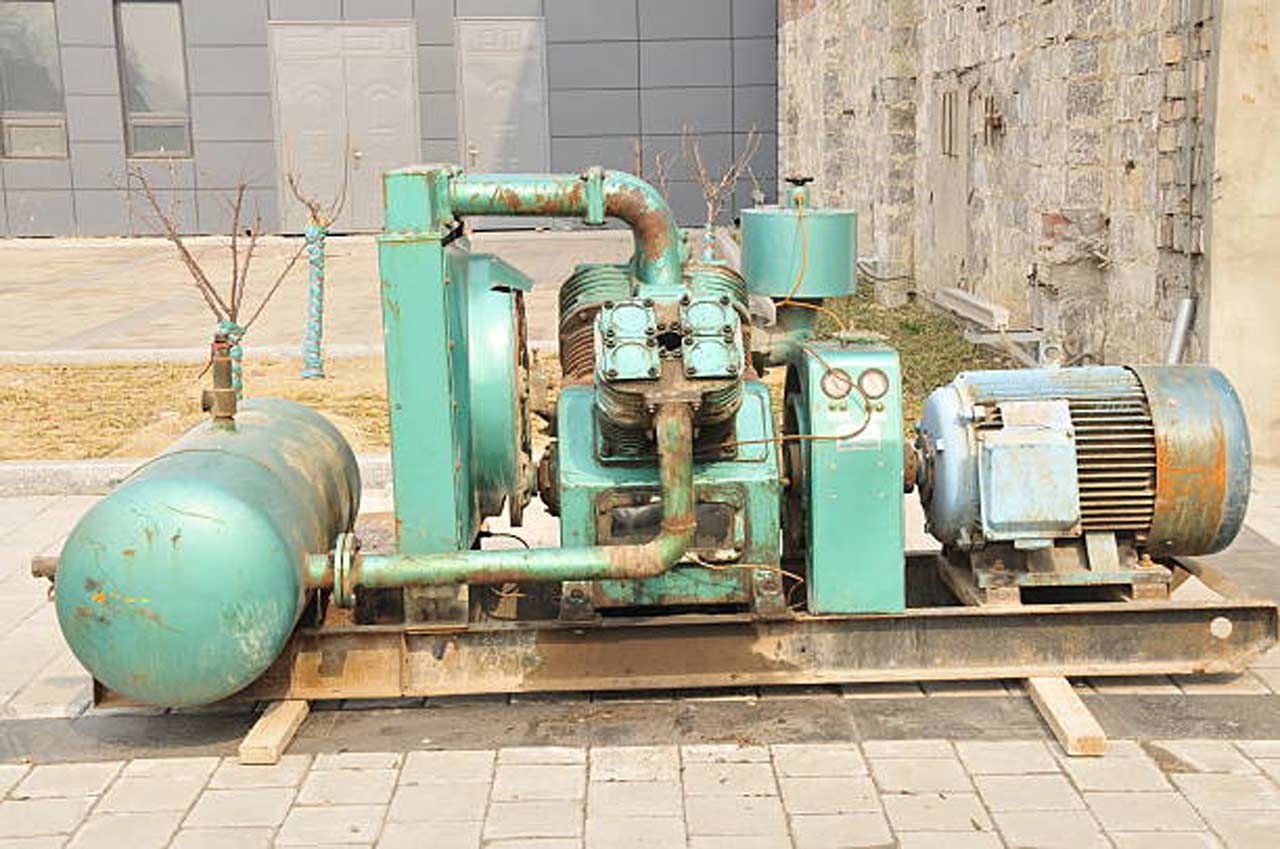
While a large number of compression sites have competent technicians, those with the most competent operations often demonstrate discipline that goes beyond a worker’s natural skillset. This manifests in the form of a daily log consistently filled out, a preventitive schedule that is strictly followed instead of doctored to accomodate more convenient practices, and a system that allows minor issues to be detected before they require expensive maintenance. Let’s look at ways to establish an operational discipline around Ariel compressor operation and maintenance.
Why Daily Logs Matter More Than Most Operators Realize
It can be easy for operators to consider daily logs to be mostly a paperwork excercise, but experienced operators will tell you that a solid daily log is one of the most valuable diagnostic tools at your disposal. After all, the time spent on it is minimal compared to the value of being able to identify trends
What to Include in a Daily Compressor Log
Pressure Readings
Suction and discharge pressures for each stage, taken at a standard point in the operating cycle
These readings should be compared to readings taken in the previous shift, as well as the established normal operating range for the site. It’s important to note abnormal readings as they are found, rather than waiting to the end of the shift to note discrepancies.
Temperature Readings
Temperature readings, particularly for cylinder discharge, are one of the best ways to identify potential issues developing with valves or rings. Temperatures for bearings, crossheads, and cooling systems should also be taken, looking for gradual increases over the established normal operating range.
Lubrication System Data
Pressure readings for the crankcase and any force-feeding points specific to the chosen system of the compressor being serviced.
The level of oil in the crankcase, visually or by measure depending on the equipment being used,
as well as temperature, should also be taken into account as a lubrication system can often be the root cause of issues developing elsewhere.
Vibration and Sound Observations
Unusual noises or vibrations should be noted, along with the approximate location and time of occurrence if possible, to aid in diagnosis if maintenance is required later. Operators should be comparing what they hear to an established baseline of normal sound for the particular unit they’re servicing, having developed a sense of what “their” compressor generally sounds like.
Operating Hours and Load Conditions
Operating hours should be noted, with separate entries for load if the maintenance schedule is done on a per-cylinder basis. Additionally, shifts spent under unusual load can be informative when taken in context with other readings.
Visual Inspection Notes
Gas, oil, or coolant leaks should be noted with approximate location and severity if possible. General observations should also be made during a visual check for the unit being serviced, even if it’s a quick walk-around. Housekeeping and general condition observations should be made for the worksite as a whole, as these can be an indicator for how well the equipment is being maintained.
Logs are useful for identifying trends, so there’s little point in keeping one if it’s not going to be reviewed on a regular basis with an eye towards recognizing trends.
The logs should be reviewed regularly, even if it’s just skimming the latest entry, to pick out any trends that might indicate developing issues. Where applicable, trends should be compared between similar machines at a multi-compressor site, as differences between machines that are otherwise similar can be indicative of developing problems. Clear criteria should be established for when logged irregularities should be escalated to maintenance for closer examination. Operators should be encouraged to understand the importance of the log, not just as a procedure to be followed, but as a diagnostic tool. A basic understanding of what the log is for can improve an operator’s logging practices and encourage them to be more thorough and attentive to potential issues.
Turning Daily Logs Into Actionable Insight
It’s common for manufacturers to specify maintenance schedules in terms of operating hours, not months or years.
A schedule should be planned around actual operating time, and should take into account variations in load and operating conditions that might necessitate changes to the schedule. A log of operating hours should be kept on a per-compressor basis, and for individual cylinders if the maintenance schedule requires it. Wherever possible, maintenance should be carried out at regularly scheduled intervals, based on whichever comes first between hours since last maintenance and a fixed number of months since last maintenance.
Building a Preventive Maintenance Schedule
Base the Schedule on Operating Hours, Not Just Calendar Time
Preventive maintenance is generally broken up into different levels based on how frequently each is required. This allows for a regular and predictable maintenance schedule, as operators and technicians can plan around the least frequent maintenance having the longest interval between services. As a very general guide, preventive maintenance can be divided into the following categories:
Every day: Logging and visual checks, basic housekeeping and leak checks.
Every week or similar short interval: More thorough inspection of easily accessible components, filter checks, review of trends in the daily log
Every month or medium interval: More thorough inspection of lubrication components, inspection of other components mentioned in the daily log, belt and coupling checks
Major service: Valve inspection and replacement, oil analysis and change, more thorough inspection
Overhaul: Comprehensive disassembly and inspection, scheduled based on total operating hours
Structure Maintenance by Frequency Tier
A schedule is only useful if it’s followed, but a properly kept maintenance log serves a different but equally important function: it allows maintenance to be tracked in relation to the rest of the equipment’s service history. This means that any maintenance performed should be logged, not just major services. Additionally, maintenance performed as a result of observations in the daily log should be logged as well, to help identify trends that can be useful in future maintenance planning. Maintenance logs should be kept in an accessible location for the relevant equipment, and where applicable, by cylinder for multi-cylinder compressors.
The realities of maintenance scheduling can often be frustrating for technicians and operators alike, but a properly structured maintenance schedule should take into account some of the most common frustrations.
Document Every Maintenance Action
A maintenance schedule should be flexible enough to accomodate real-world conditions at the jobsite.
Some sites may have equipment that’s seeing much harder use than at another, less strenuous site. In such cases it may be necessary to adjust the maintenance schedule to be more conservative for the more strenuous equipment. Conversely, a site with particularly easy conditions may be able to extend some maintenance intervals beyond the manufacturer’s recommendations, but this should be done carefully and with due consideration to the equipment’s actual service history.
Common Gaps in Compressor Maintenance Programs
Inconsistent Logging Discipline
A logging program that is diligently followed on some shifts while inconsistently applied on others offers far less diagnostic benefit than a simpler logging program applied consistently across all shifts.
Simplicity enhances the likelihood of adherence to the logging regimen, making it a preferred alternative to complex logging requirements that are inconsistently followed
Logging should be embedded as a fundamental element of a broader set of maintenance-related procedures, minimizing the temptation to defer or avoid it during busy periods.
Treating Maintenance Intervals as Rigid Rather Than Adaptive
Manufacturer recommended maintenance intervals represent a set of generally applicable guidelines, not universally applicable mandates.
A given site’s maintenance intervals should be carefully evaluated and potentially adjusted based on actual operating conditions. Thus, a site with particularly severe operating environments may find that its maintenance intervals need to be shortened, while a site with especially benign operating conditions may consider extending them.
Reviewing actual operating conditions and comparing them against recommended intervals should be used as a basis for adjusting maintenance intervals.
Disconnected Logs and Maintenance Planning
Daily logs and preventive maintenance procedures are two critical, but often disconnected aspects of a compressor maintenance program. There is often little or no feedback loop between them, despite the fact that trends seen in daily logging can highlight maintenance issues before they become serious problems.
Trends seen in daily logs should be used to guide proactive maintenance decisions, including the possibility of accelerating certain preventive maintenance activities.
At the same time, the results of maintenance activities should be used to shape future logging priorities.
By linking these two key processes, a fundamentally synergistic maintenance methodology emerges that capitalizes on the diagnostic value of both.
Local Considerations for Ariel Compressor Operation in Pakistan
Environmental Factors Affecting Daily Operation
High temperatures prevalent throughout much of Pakistan during the summer necessitate caution in assessing baseline readings during summer versus winter months
Dust, which is prevalent at many worksites, makes checking the filters and intake for proper airflow a crucial part of the daily log
The remoteness of some worksites means that maintenance should be scheduled with lower parts and technician availability in mind, and with more room for travel time than would be the case at a site near suppliers and service personnel
Building Operational Discipline Across Shifts and Sites
Standardizing log formats and maintenance schedules among multiple worksites within an operational sector promotes the value of consistency and allows worksites to learn from one another’s maintenance experiences
Operator training programs should highlight the importance of logging in support of predictive maintenance, and not merely as a company requirement
Operator interaction with log reviews and maintenance should include regular, meaningful discussion of trends and findings to promote a sense of shared purpose and encourage involvement beyond paperwork and scheduled maintenance visits
Final Thoughts
Ariel compressors in Pakistan provide outstanding value to their owners and operators under the right maintenance regime. The key to unlocking this value lies in the development of maintenance-related competencies among personnel, particularly the understanding that diligent and thorough daily logging, combined with maintenance activities scheduled based on actual operating time rather than convenience, represents a major force multiplier for any given maintenance program. Sites that embrace this truth see significantly better results from their maintenance activities, reflected in both their lower downtime and overall maintenance costs over the lifespan of a given asset. In short, the development of maintenance-related competencies among site personnel should be viewed as an integral part of any maintenance strategy for Ariel compressors in Pakistan.
If you are seeking to purchase genuine Ariel compressor parts for your maintenance program, we invite you to explore our online catalog at gencomspares.com.pk or contact us directly to receive assistance in selecting the right maintenance program for your compressors.