

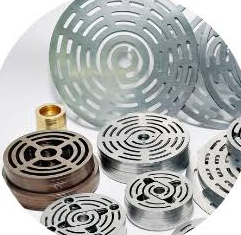
Every compressor owner eventually asks the same question: should I stick with the original manufacturer’s valve parts, or go with an aftermarket brand for something this important? It’s a valid concern valves are one of the few parts where a mistake can quickly lead to serious damage. Here’s a straightforward take on where KB Delta stands in this decision, and how you can assess it yourself instead of just trusting what a supplier says.
Why This Question Needs a Thoughtful Answer
Compressor valves aren’t something you can afford to be careless with.
They operate under constant mechanical and heat stress, cycling thousands of times every hour. If something goes wrong, it’s not just about losing efficiency. It could lead to debris entering the cylinder, turning a simple valve repair into a full cylinder overhaul. That’s why operators are often hesitant to switch from original equipment manufacturer (OEM) parts, and that hesitation is well-founded.
At the same time, treating “OEM only” as an absolute rule misses the fact that aftermarket valve manufacturing has improved a lot.
Some aftermarket companies specialize in making compressor valves, with engineering expertise that may not always be matched by a general OEM parts catalog, which is designed to cover a wide range of equipment.
The real answer isn’t that you should always go with OEM or always choose aftermarket.
It’s about understanding what really makes a valve reliable and evaluating a specific manufacturer based on that standard.
What Actually Makes a Valve Reliable
Material Specification
The materials used in a valve’s plate, seat, and spring are crucial in how it handles pressure, temperature, and the type of gas it’s working with.
This is more important than the brand name on the package.
– The plate material needs to match the gas you’re using and the temperature conditions of your setup.
– The spring rate has to be engineered for your compressor’s speed and pressure levels, not just similar to the original part.
– The seal and gasket materials must be suitable for the chemical and temperature conditions your system experiences.
A manufacturer — whether OEM or aftermarket — that gets these specifications right for your particular application is doing their job properly.
One that doesn’t ask about your specific conditions before suggesting a part is a bigger warning sign than the brand name on the box.
Manufacturing Tolerance and Consistency
Valve parts need precise and uniform measurements to ensure they seal effectively and wear in a predictable way.
When parts are not consistent, even within the same group, it can lead to problems that are difficult to find and fix later.
– Maintaining a uniform thickness in the plate and flatness of the seat is key to achieving a strong seal.
– Ensuring that the spring strength is consistent across the entire valve spring set helps in distributing pressure evenly on the plate.
– A company that follows strict quality control processes makes sure that each part behaves the same way, making the product reliable and repeatable.
Engineering Focus on the Specific Application
Some manufacturers spread their engineering efforts over a wide range of products.
Others concentrate specifically on compressor valve parts and pay more attention to the details of how those parts work.
– A company that specializes in compressor valves has a strong reason to deeply understand how valves function, as it is their main product.
– This focus often appears in small but important details, such as optimizing the shape of guards and plates, which a broader manufacturer may treat as a basic, less refined design.
– A company’s experience with your particular type of compressor is more important than just a general reputation.
Where KB Delta Fits Into This Evaluation
KB Delta makes compressor valve parts, such as plates, seats, springs, guards, and full valve assemblies.
These are made to fit various types of reciprocating compressors, including those where users might normally go for original equipment manufacturer (OEM) parts.
Specialization in Valve Components Specifically
KB Delta focuses on making valve parts for compressors, not a wide range of equipment.
This kind of focus usually means more attention is paid to how the valve parts work, such as how the plate moves, how the seat wears over time, and how the springs behave under repeated stress, rather than just treating valves as one part among many unrelated products.
Material and Engineering Options
Aftermarket valve makers with good engineering skills often offer various material choices to suit different gases and conditions, sometimes giving more options than a single OEM part number.
– Ask any supplier about the material choices for the plate and seal that are suitable for your specific use and operating conditions.
– A manufacturer that offers informed advice on materials, rather than just one default option for all applications, shows real understanding of the application.
– This variety can be a real benefit compared to a single OEM part that may not be tailored for every possible environment.
The Trust Question: How to Verify, Not Just Assume
It’s easy to make claims about reliability, but harder to prove them.
Instead of just trusting any manufacturer’s reputation, whether it’s an OEM or an aftermarket supplier, here’s how you can actually evaluate their reliability for your situation.
– Request documentation on the specific materials used in the parts you are considering and check if they match your application’s needs.
– Ask for references or performance records from other users with similar equipment, if your supplier can provide this.
– Start with a small order on a less critical unit before moving to a full-scale change, so you can test the real-world performance before making a bigger commitment.
– Keep track of how the parts perform after installation like temperature changes, how long the valve lasts, and any unexpected issues so your future purchasing decisions can be based on your own results, not just marketing claims.
When OEM Still Makes More Sense
It’s important to be fair to the OEM side of this comparison because the best choice really depends on your unique situation.
– If equipment is still under the manufacturer’s warranty, using OEM parts is often necessary to keep that warranty valid — always check the terms before switching.
– For newer or less common compressor models, there might not be a well-tested aftermarket valve option available yet.
– In extremely high-risk applications, where any uncertainty in performance could lead to serious issues.The extra cost of OEM parts might be justified simply because of their documented reliability, even if a quality aftermarket option would likely work just as well.
– If you don’t have a track record with a specific aftermarket manufacturer and can’t independently verify their quality, choosing OEM can be a safer bet.
None of these situations suggest that aftermarket parts are unreliable in general — they’re just specific cases where the documented history of OEM parts carries more practical weight than a performance argument alone.
A Practical Framework for the Decision
Rather than making this a permanent, all-or-nothing decision, most experienced operators approach it piece by piece, looking at each component and application separately.
1. Determine the criticality level of each unit — which ones can’t tolerate any performance uncertainty, and which ones have more flexibility.
2. Start with aftermarket options on lower-criticality equipment so you can learn from the experience without risking major operations.
3. Verify material specifications and manufacturing quality directly, instead of relying solely on price as an indicator of quality.
4. Build your own performance history with any aftermarket manufacturer you’re considering, and let the data not just brand reputation guide your future purchases.
5. Stay open-minded what works for a spare valve might not be the best choice for your most critical compression unit.
Local Considerations for Buyers in Pakistan
A few factors influence how this decision works for operators in Pakistan looking to source valve parts.
– Import delays for OEM parts can be longer than for aftermarket options available from local suppliers with stock, which is important if you need a replacement quickly.
– Climate conditions — such as high summer temperatures and exposure to dust make it especially important to match material specifications, no matter which option you choose.
– Cost sensitivity is common in Pakistan’s industrial sector, making the cost advantage of aftermarket parts meaningful for maintenance budgets, as long as quality is maintained.
– Supplier verification is more important when it’s difficult to check import documentation directly — work with a supplier who can explain details about materials and manufacturing origin, not just confirm a part “fits.”
Final Thoughts
For many applications, the answer is yes as long as the components are properly matched to your compressor’s operating conditions and sourced through a supplier who understands the application, not just the part number. The key factor isn’t the brand name on the valve. It’s the material specification, manufacturing consistency, and a real track record you can verify whether that track record belongs to an OEM manufacturer or a specialized aftermarket provider like KB Delta.
If you’re deciding between OEM and KB Delta for your next valve replacement, browse genuine spare parts at gencomspares.com.pk, or talk to our team to find out which option is best for your specific compressor and operating conditions.